


This is part of the Ownership Costs & Budget Planning Guide → [Ownership Costs & Budget Planning Guide] & the larger Homeownership 101 Guide→ [Homeownership 101]
Written by: Renee Burke
Here in the Valley, we all know the sun doesn’t just shine—it commands attention. Our extreme summers push homes to their limits, but the right improvements turn that challenge into everyday ease. As someone who’s helped countless families adapt their spaces, I’ve seen how thoughtful upgrades create lasting comfort without overwhelming budgets or designs.
You already trust the rhythm of Phoenix living, so let’s talk specifics: changes that fit our desert reality, blending practicality with the joy of being outdoors more.
Cool Roofs and Reflective Coatings
Start with the roof—it’s your home’s first line of defense. Traditional dark roofs absorb heat, pushing attic temperatures past 150°F and forcing AC units into overdrive. Switching to a cool roof with reflective coatings or tiles bounces sunlight away, dropping indoor temps by 20-30°F and slashing cooling bills.
These aren’t flashy changes; they’re subtle upgrades that extend roof life in our intense UV exposure. In neighborhoods like Ahwatukee or north Scottsdale, homeowners often pair them with radiant barriers—thin foil installed in attics that reflects up to 97% of radiant heat before it seeps downstairs. The result? Rooms stay consistently cooler, even on 115°F days.
Window Upgrades and Solar Screens
Windows are heat magnets in Phoenix, especially west- and south-facing ones baking all afternoon. Replacing single-pane glass with energy-efficient double- or triple-pane models with low-E coatings blocks UV rays while letting in light. But if full replacement isn’t in the cards, solar screens are a game-changer—mesh coverings that cut heat gain by 60-80% without darkening views.
I’ve advised clients in Gilbert and Chandler to add retractable exterior shades for patios too. These let you control sunlight precisely, keeping interiors livable and outdoor areas usable longer into the evening. It’s a simple shift that reclaims your view of the McDowell Mountains without the glare.
Attic and Wall Insulation Boosts
Many mid-century Phoenix homes came with minimal insulation, fine for milder climates but no match for our summers. Blown-in cellulose or spray foam fills gaps in attics and walls, creating an airtight seal that traps cool air inside. Expect 20-40% savings on SRP or APS bills, plus fewer hot spots in upstairs bedrooms.
Radiant barriers pair beautifully here, reflecting heat away proactively. For long-term owners, this means less strain on HVAC systems and fewer repairs—crucial when AC runs nine months a year. In established areas like Arcadia, these upgrades often pay for themselves in under five years.
Shading and Patio Enhancements
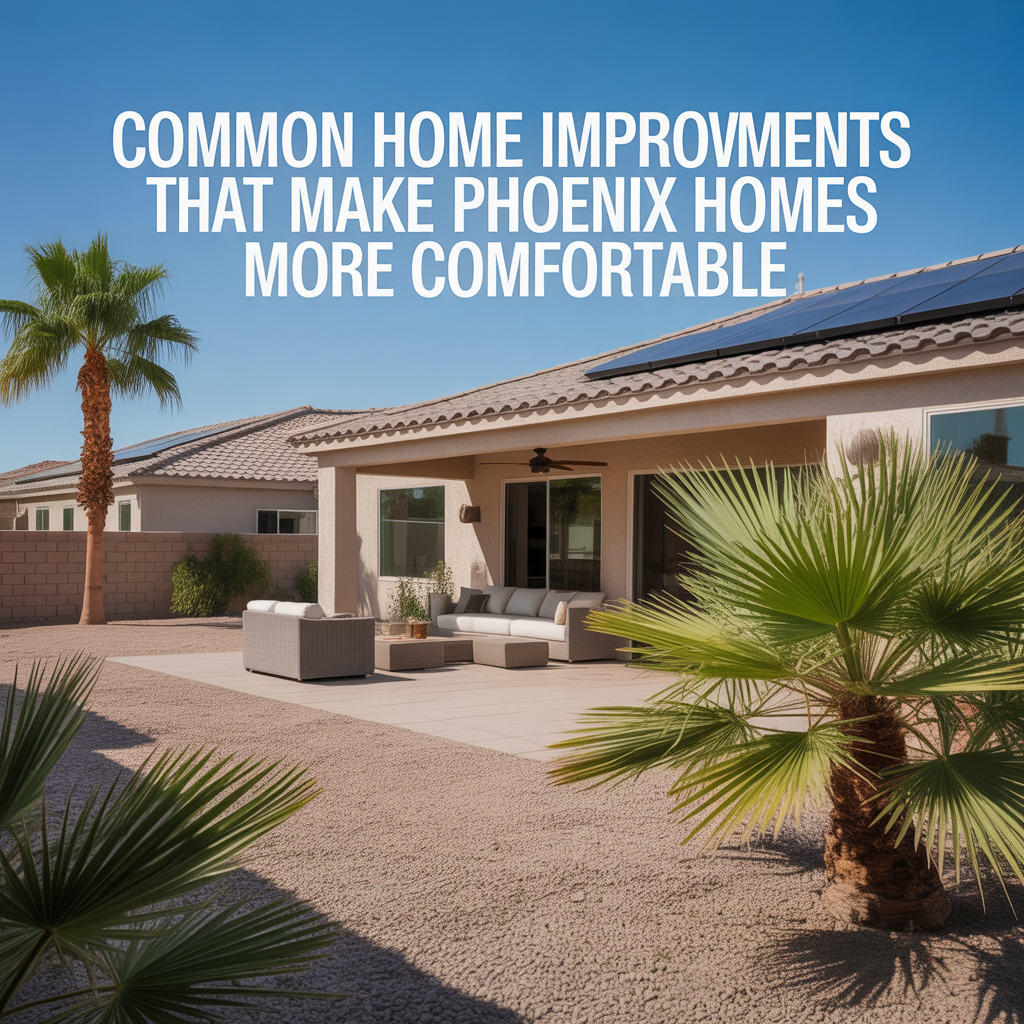
We live outside here, but uncovered patios become wastelands by June. Extending eaves, adding aluminum pergolas, or installing misting systems extends usability. Ceiling fans with LED lighting turn these spots into evening havens, while roll-down shades on tracks provide midday relief.
Pool owners in Desert Ridge swear by shade sails over lounging areas—they’re affordable, stylish, and cut water evaporation too. These aren’t just comforts; they protect stucco, doors, and furniture from UV fading, reducing maintenance headaches down the line.
HVAC and Smart System Tweaks
No improvement list skips air conditioning—it’s our lifeline. Upgrading to a high-SEER variable-speed unit handles peak loads quietly and efficiently. Whole-house fans pull in cooler night air, flushing heat before dawn, which is especially smart in foothill homes where evenings dip nicely.
Zoned thermostats let you cool active areas only, like the kitchen during morning prep or kids’ rooms at night. In Tempe’s denser neighborhoods, mini-splits for casitas or garages add flexibility without retrofitting ducts. Pair with programmable vents, and your home adapts to how your family moves.
Landscaping for Natural Cooling
Yards matter too. Drought-tolerant plants like agave and palo verde create micro-shades, while gravel over grass cuts watering needs. Tall trees on west sides—think mesquite or ironwood—block afternoon rays without overwhelming small lots in Verrado.
Drip irrigation and smart controllers ensure efficiency, keeping soil cool and roots happy. This isn’t landscaping for show; it’s functional beauty that lowers ambient yard temps by 10-15°F.
Sealing and Minor Efficiency Wins
Don’t overlook the basics: weatherstripping around sliders, attic hatches, and garage doors stops hot air infiltration. High-quality filters in vents trap monsoon dust, easing AC workload. Reflective exterior paint on walls drops surface heat, a quick refresh that shines in resale tours.
Addressing Fears and Realities
I know the worries: “Will this disrupt my life?” or “Is it worth it long-term?” Most projects wrap in days with minimal mess, and rebates from APS or federal tax credits offset costs. In our appreciating market, these boost appraisals—buyers seek heat-beating features.
Older homes in central Phoenix might need HOA nods, but variances come easier for energy upgrades. Newer builds in Eastmark already include many, proving they’re standard now.
Long-Term Value in the Valley
These changes aren’t trends; they’re how we thrive here. They extend AC life, protect interiors from fading, and create homes that feel welcoming year-round. Families tell me it’s like gaining extra living space—cooler, quieter, more yours.
A Word from Renee
If you’re ready to ease your home into true Phoenix comfort, I’ve walked this path with neighbors across the Valley—from quick fixes to full overhauls.
If you’re thinking about making a move in Phoenix, you don’t have to figure it out alone. Reach out—I’m here to guide you toward spaces that support your life, comfortably and confidently.
Get the full Phoenix Market Insights → [Market Insights]


-
Cost of Living in Rhode Island: Housing, Taxes, Utilities, and Everyday Expenses
-

What If My Commute Becomes Worse Than Expected?
-
How Aging Home Systems Affect Property Value