


Home Inspections Guide -> [Home Inspections Guide] & For more info on Buying in the Denver Metro Area → [Denver Metro Home Buying Process]
Written by: Chad Cabalka
To understand why this distinction matters here, start with the homes themselves. Many of Denver’s most beloved neighborhoods — Park Hill, Congress Park, and Highlands among them — were built decades ago. Even the postwar ranches in places like Harvey Park or Virginia Village now show their age.
Add to that Colorado’s harsh winters, hot summers, and constantly shifting clay soil, and nearly every home in town carries visible wear. Paint fades, hairline stucco cracks appear, and trim warps. These may look alarming, but most are harmless signs of our dry climate — normal aging rather than structural risk.
By contrast, a sleek, newer home in RiNo or Sloan’s Lake may look flawless, only to reveal moisture or framing issues later on. The Denver market rewards buyers who can look past appearances to what truly matters beneath the surface.
What Counts as “Structural” in a Home
Structural issues relate to a home’s core stability — the foundation, framing, load-bearing walls, or roof integrity. Here on the Front Range, foundation movement is the most common culprit due to expansive clay soil that swells and shrinks with moisture.
Telltale signs include sloping floors, cracking brick, or sticking doors. These don’t always mean disaster, but they do warrant inspection. A professional structural engineer can determine if you’re dealing with seasonal movement or a repair that requires stabilization.
Other elements, like plumbing or electrical systems, aren’t technically structural but can cause damage that feels structural when leaks or failures go unchecked. The key difference is scale and permanence — structural problems affect the home’s long-term health, while system maintenance is part of normal ownership.
What’s Merely “Cosmetic” — and Why It Matters
Cosmetic issues affect appearance but not performance. Think dated finishes, scuffed hardwoods, uneven paint, or worn countertops. They’re often what buyers notice first and what sellers worry about fixing — yet these issues rarely affect a home’s livability.
Take a mid-century ranch in Littleton with avocado tile and paneled walls. To some, it feels outdated beyond hope. But if the foundation is dry and stable, those surface upgrades are aesthetic investments — predictable, optional, and often rewarding. Meanwhile, a trendy, flipped home with perfect staging may conceal poor drainage or rushed construction beneath its shine.
Cosmetic imperfections are the easiest to correct and the fastest to appreciate in value. Structural integrity is what gives you the freedom to focus on those upgrades confidently, one project at a time.
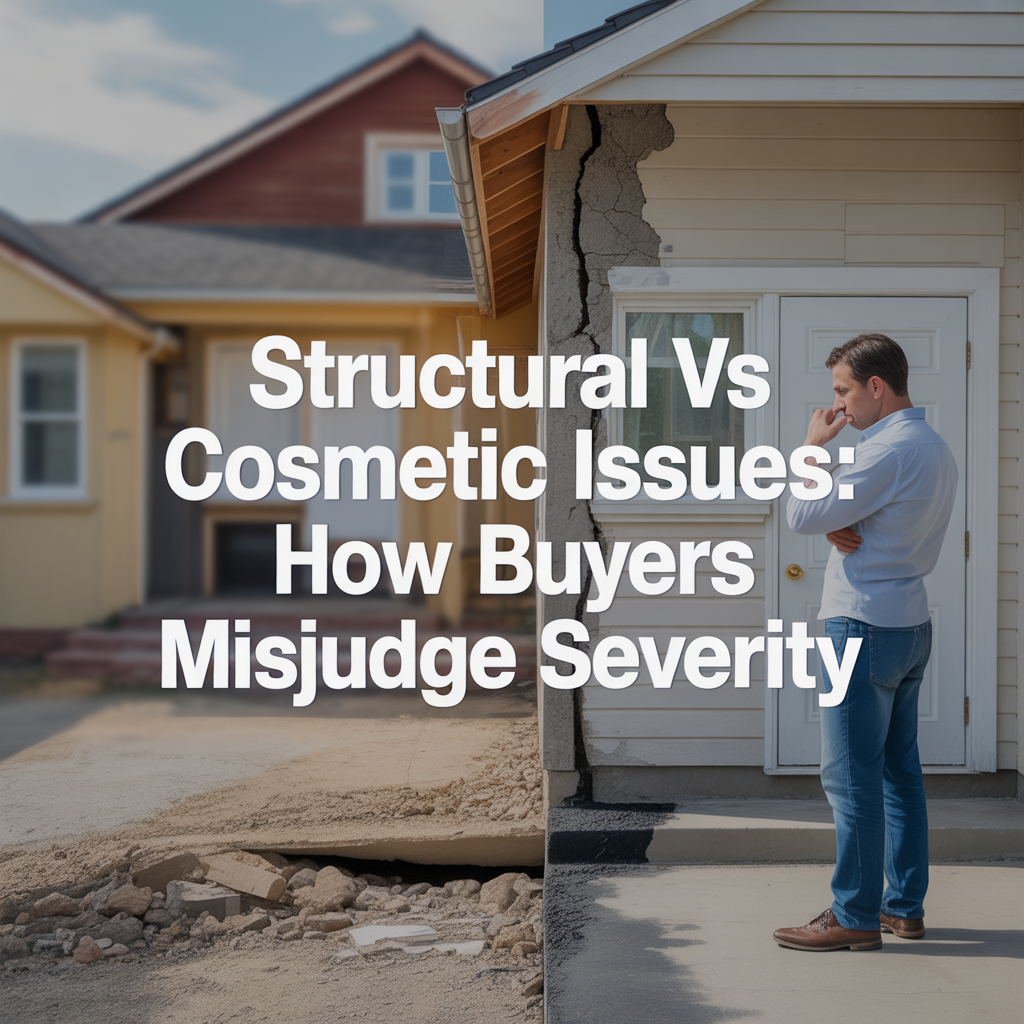
How Denver Buyers Commonly Misjudge Severity
I see two consistent patterns among local buyers: overreaction and overconfidence.
Overreaction usually happens when a buyer unfamiliar with Denver’s historic housing stock interprets normal signs of settling — hairline cracks, uneven floors, or visible patch areas — as danger. These are often harmless shifts tied to soil movement and seasonal dryness, not major structural failures.
Overconfidence, on the other hand, strikes when buyers judge by finish alone. A modernized home with fresh flooring and bright paint can disguise poorly addressed moisture or framing issues. Many quick flips from the past decade put aesthetics ahead of quality.
The lesson is simple: old homes are rarely perfect, and new-looking homes aren’t automatically safe. Context and inspection matter far more than sheen.
Cost Perspective: When to Worry and When to Plan
Here’s a practical framework. Structural problems affect a home’s safety and stability. Cosmetic problems affect comfort and enjoyment.
In dollars, the difference is dramatic. Structural repairs — foundation stabilization or major roof framing — often start around the five-figure range. Cosmetic updates are discretionary and can be phased over time as budget allows.
In Denver’s mixed inventory, the smartest buyers often target homes that look tired but stand strong. A few weekends of painting or new light fixtures are manageable compared to years of fighting hidden water damage. True long-term value comes from basics that endure beyond décor trends.
Working With Inspectors and Contractors
If you’re unsure how to spot these distinctions, rely on seasoned local professionals. A Denver-based home inspector who understands our soils and construction eras can tell you what’s routine and what needs deeper review.
When structural concerns do appear, a structural engineer provides objectivity — not fear, just clarity. Resist drawing conclusions from listing photos or cosmetic impressions alone. Every Denver home has its quirks, shaped by the decade it was built and how it’s been cared for.
Your goal isn’t perfection; it’s awareness. The right team helps you understand a property’s reality so you can buy with open eyes, not crossed fingers.
Long-Term Thinking: Living With and Without Regret
After years in this business, I’ve learned that what bothers buyers most at closing rarely matters a decade later. Those paint colors, dated tiles, or quirky fixtures fade into memory. What lasts — quite literally — is the structural soundness that keeps everything else working.
A well-built home with honest wear will age gracefully with you. A “perfect” home built on shaky ground will ask for attention again and again. Thinking in decades instead of months helps you spot the truly valuable properties — the ones you can live in comfortably, improve steadily, and love longer than a trend cycle.
Guidance for Today’s Denver Market
If you’re touring homes in Denver this season, look beyond first impressions. Ask your Realtor about the home’s structure before its staging. Balance what you see with what’s verifiable through inspection and history. Focus on properties where the bones are strong and the upgrades can grow with your lifestyle.
Good structure gives you options — to personalize, remodel, or simply relax without major surprises. That’s the foundation of lasting satisfaction in any market, especially ours.
A Final Word
Buying or selling a home in Denver isn’t just a checklist — it’s a long-term decision rooted in place, stability, and care. If you’d ever like to sit down and talk through how to evaluate a property’s true strengths, I’d be glad to help.
No pressure, no rush — just an honest conversation about what makes certain homes in Denver worth keeping for the long run.
Reach out any time — let’s talk about your next move in a way that honors both your peace of mind and your future.
Get the full Denver Market Insights → [Market Insights]



Littleton’s Ken Caryl for Lockheed Relocations
This is part of Lockheed Martin Relocation → [Lockheed Martin Relocation Hub] & the larger Denver Relocation Hub → [Denver Relocation Hub] Written by: Chad Cabalka Ken Caryl is one of the best-kept “family first” relocation options for Lockheed Martin employees who want foothills scenery, strong neighborhood appeal, and a real suburban lifestyle that still feels connected…


Centennial & Parker for Lockheed Relocations
This is part of Lockheed Martin Relocation → [Lockheed Martin Relocation Hub] & the larger Denver Relocation Hub → [Denver Relocation Hub] Written by: Chad Cabalka Centennial and Parker are two of the smartest suburban choices for Lockheed Martin employees relocating with families because they give you a strong balance of commute flexibility, good neighborhood variety, and…

Highlands Ranch for Family-Friendly Lockheed Relocations
This is part of Lockheed Martin Relocation → [Lockheed Martin Relocation Hub] & the larger Denver Relocation Hub → [Denver Relocation Hub] Written by: Chad Cabalka Highlands Ranch is one of the strongest choices for Lockheed Martin employees relocating with families because it delivers exactly what most parents want after a big move: stable neighborhoods, strong community…